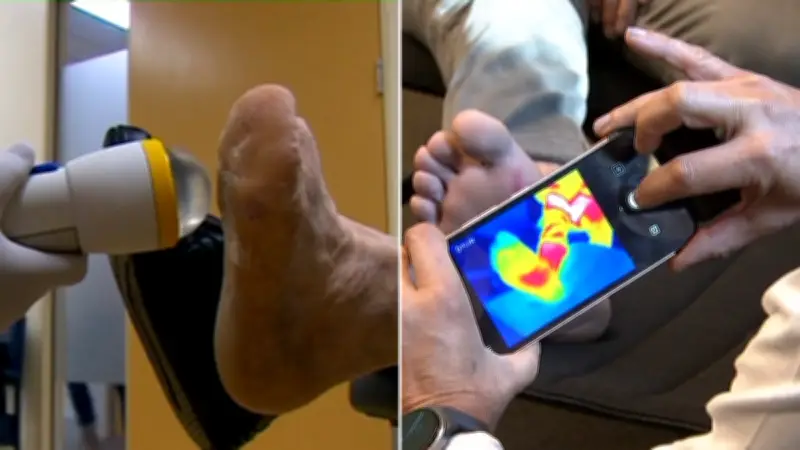
Melbourne researchers have developed a world-first AI-powered handheld camera that analyses heat patterns and skin textures to predict whether a diabetic wound will heal. The breakthrough technology is designed to give doctors better intelligence to intervene before irreversible damage occurs, potentially saving thousands of Australians from limb loss.
How the technology works
The device detects subtle changes in temperature and skin texture that are invisible to the human eye. This allows clinicians to identify high-risk patients at the very first appointment and begin treatment immediately.
Diabetic foot ulcers affect many Australians each year, often leading to infection, hospitalisation and, in severe cases, amputation. The new tool aims to change that trajectory by flagging wounds unlikely to heal early on.
A patient's story
George Diamataris, a 56-year-old father of two, lost his leg after an 18-month struggle with an infected sore. He described the emotional toll of the amputation: "Before and during the amputation, I thought, you know, what am I going to be able to do afterwards?"
Stories like George's are common among people with diabetes, where a minor wound can escalate into a life-changing event.
Experts and impact
Professor Elif Ekinci from the University of Melbourne highlighted the significance of the work: "Limb amputation can reduce a person's life expectancy for up to 19 years. It has an impact on themselves, on their family. It's a huge thing to be able to prevent limb loss."
The technology is currently being trialled in clinics across Victoria. Researchers are now seeking TGA approval to make it available globally.
Potential for remote areas
Professor Dinesh Kumar from RMIT University said the device could be revolutionary in many parts of the world. He noted its simplicity: "This particular device will be something which anyone, any clinician without any training can use quickly without any wet labs."
Experts believe the tool will be especially valuable in remote areas, where specialist care may be hundreds of kilometres away and every day counts.