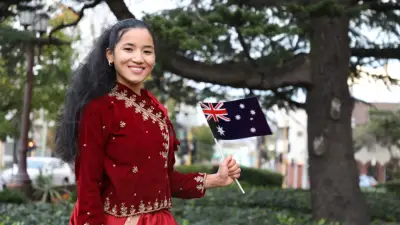
Para taekwondo athlete Shrijana Ghising, 26, has been granted fast-tracked Australian citizenship and now hopes to represent Australia at the 2028 Paralympic Games in Los Angeles. She won silver at the Gangwon-Chuncheon 2026 World Para Taekwondo Open Challenge in South Korea earlier this month — her first international tournament representing Australia.
A journey from Nepal to the world stage
Ghising took up para taekwondo for fun when she was 18. Eight years later, she is one of the world's top athletes in the sport and is chasing a place at the LA 2028 Games. Originally from Nepal, she travelled to Australia on holiday in 2023 but quickly fell in love with the country.
"I have experienced a lot of discrimination in my life, but when I came to Australia everyone was very kind, and they did not treat me differently because of my disability," she said. "Everyone in Australia is treated with the same respect."
Citizenship and the road to LA
Under special provisions of the Citizenship Act and with authorisation from Home Affairs Minister Tony Burke, Ghising's citizenship application was expedited so she could compete for Australia at upcoming tournaments. She officially became an Australian citizen at a ceremony in Melbourne's inner-west in June — just in time to represent Australia at the Para Taekwondo Open Challenge.
Australia has a special citizenship pathway for elite athletes and coaches to represent the country internationally. The law was changed last year so Australian permanent residents who train or compete overseas as part of their sporting commitments are not disadvantaged in their pathway to citizenship, a move welcomed by the Australian Olympic Committee and Paralympics Australia.
However, refugee advocacy groups have previously said the rules should be broadened to include all people applying for Australian citizenship. In 2009, when the government proposed shortening residency requirements for elite athletes, the Federation of Ethnic Communities' Councils of Australia welcomed the change but said it wanted everybody to be treated equally under citizenship law.
A new home and a new dream
Ghising lived in Burnie, Tasmania, for two years before moving to Melbourne to further pursue her taekwondo career. "My mother and my life partner motivated me to fulfil my taekwondo journey," she said.
In 2024-25, a total of 165,193 people became Australian citizens, representing over 190 different nationalities. Damien Kilner, from the Department of Home Affairs, said the federal government worked closely with sporting bodies to identify citizenship pathways for athletes seeking to represent Australia. "Shrijana's journey from being a visitor who fell in love with this country to now preparing to represent the green and gold on the world stage highlights the important contributions new citizens can make to Australia and our international success," he said.
Support from Paralympics Australia
Paralympics Australia chief executive Cameron Murray welcomed Ghising to the Australian Paralympic movement. "Para sport offers so much to Australians with disability, and it is pleasing that Shrijana is already experiencing its value, which can extend far beyond sport," he said.
"As part of our lead role within the Australian sporting system, Paralympics Australia looks forward to working with our partners to support Shrijana's journey as she strives to represent Australia on the international stage. Her story exemplifies the values that make our Paralympic movement so special: courage, resilience and the pursuit of opportunity."