
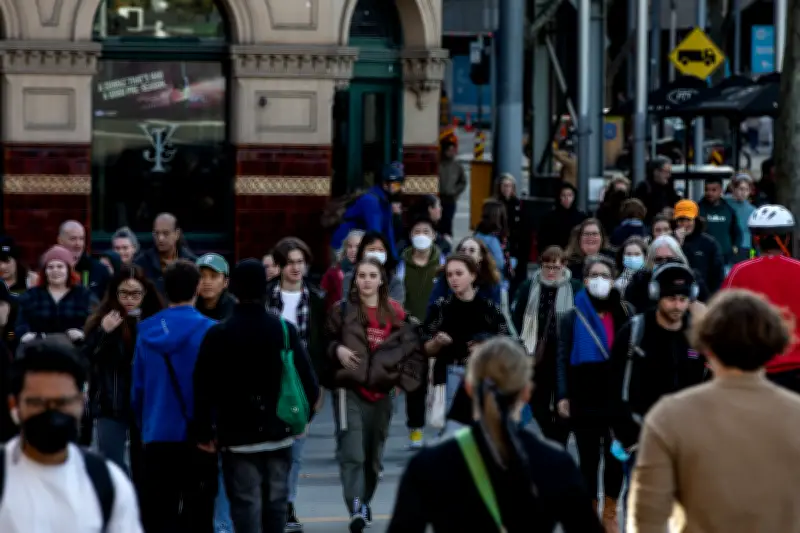
On August 11, every household in Australia is required to participate in the national Census, a comprehensive survey conducted every five years by the Australian Bureau of Statistics (ABS). The Census includes everyone in the country, including tourists, international students, and temporary visa holders.
Why the Census Matters
Dr Liz Allen, a demographer at the ANU Centre for Social Policy Research, describes the Census as "much like a family photograph at one point in time." She says it captures a still of who we are and how we live, providing vital data for essential services like healthcare, education, roads, and sewage. "The census is the only way that we can understand the socioeconomic circumstances of our lives in the cities, in the regions, all the way down to our suburbs," she added.
How to Complete the Census
Households will receive instructions by mail from late July. If you know where you'll be on Census night, you can complete the form right away. For those in hotels, B&Bs, or motels, paper forms are available from staff. Short-term rental guests with internet access can complete it online.
Dr Allen explains that collecting data on a single evening provides a consistent reference point. "That anchor point gives us a scope of who to include and who not to include in that moment," she said, noting it might seem like some are excluded, but it's essential for an accurate national snapshot.
New Questions on Sexuality and Gender
This year's Census includes new questions on sexual orientation and gender, plus changes to ten existing topics. Nicky Bath, CEO of LGBTQ+ Health Australia, says advocates have long pushed for these additions. "There's a really strong data need for us to be able to extrapolate data from the census in regards to people with diverse sexual orientations and gender," she said, highlighting their use in planning public services and health policies.
However, Bath notes that questions about innate variations of sex characteristics, such as intersex, remain excluded. "We also did advocate for the question on innate variations of sex characteristics and we were unsuccessful with regards to that," she said.
Language Support and Accessibility
Census data informs decisions on language services, settlement support, infrastructure, and transport. While the ABS website offers information in 26 languages, the questionnaire must be completed in English. Non-English speakers can use the Translating and Interpreting Service, which provides interpreters in over 150 languages.
Peter Doukas, chair of the Federation of Ethnic Communities Councils of Australia (FECCA), stresses the need for equal access. "People don't understand what the census is," he said, adding that projects with the ABS aim to make it more accessible linguistically and culturally, so people know their information won't be used against them.
Penalties and Scam Warnings
Everyone is expected to complete the Census. Failure to do so can result in prosecution and fines up to $364 per day. Be wary of scams: the ABS will never ask for bank details, money, passwords, identity documents, or tax file numbers.
ABS spokesperson Hassan Hawatmeh advises checking for official markers. "The census letter will have all the instructions, including 16 digits code and also temporary password," he said. The form is only on the ABS website, and field staff must always wear ID cards with their photo, name, and employee number.