
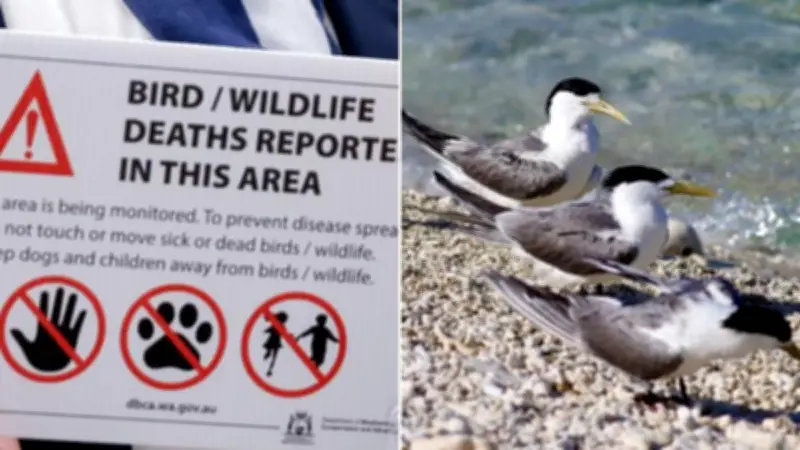
Two more cases of H5 avian influenza have been confirmed in New South Wales after tests on two deceased Greater Crested Terns returned positive results. The birds were found near Narooma on the south coast and near Wentworth in western NSW.
Both birds were reported by members of the public to the Emergency Animal Disease Hotline and sampled by the state’s H5 response team. Testing was carried out at CSIRO’s Australian Centre for Disease Preparedness.
First native bird cases in NSW
This marks the first time an Australian native bird has tested positive for H5 in NSW. The new detections bring the state’s total to four, following two migratory petrel birds found near Port Stephens in early July.
Nationally, Australia has now recorded 215 confirmed H5 detections. Surveillance teams remain on the ground at Narooma and Wentworth to monitor for any further cases.
Rising detections in South Australia
The NSW findings come as South Australia reports a sharp rise in H5 detections, with more than 80 birds — mostly Terns — identified in recent weeks. A national surveillance plan has been running since June to track new cases and coordinate rapid response efforts.
More than 3558 calls have been made to the Emergency Animal Disease Hotline since June, with public reporting described as “critical to early detection”. Authorities say H5 bird flu has not been detected in commercial poultry flocks or captive birds anywhere in Australia, and the risk to human health remains low.
Government response
Environment Minister Penny Sharpe said the new cases were “not unexpected”. “We have been preparing for a situation like this, and we remain well equipped to respond to manage further impacts,” she said. “We are using the best available data and tools to target actions for our most at‑risk wildlife species and important natural places.”
Agriculture Minister Tara Moriarty said governments were working closely with the poultry industry, where there have not yet been detections, to strengthen biosecurity. People are urged to avoid contact with sick or dead birds or marine mammals and report them immediately to the Emergency Animal Disease Hotline on 1800 675 888.