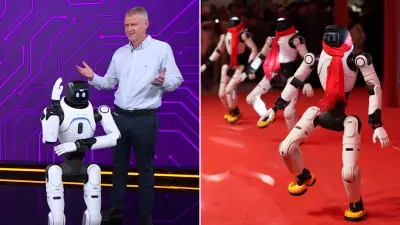
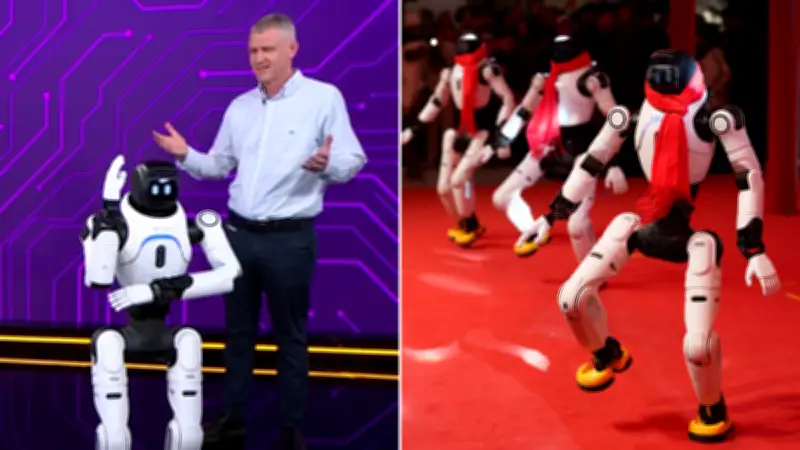
Humanoid robots are rapidly becoming a reality, and technologists are warning society is entering uncharted territory as machines begin to take on increasingly human roles. The warning comes ahead of the OpenSummit.AI conference in Sydney on Thursday and as the federal government develops a national artificial intelligence plan to help Australia keep pace with rapidly advancing technology.
Machines Replacing Thinking
Technologist Clayton Cross joined Sunrise alongside humanoid robot Lumi to discuss the machines. He said their rise marks a turning point unlike previous technological revolutions, because, for the first time, machines are beginning to replace human thinking rather than simply physical labour.
“We’ve never been here before. We’ve had machines replace muscle. We’ve had computers replace software, but we’ve never had something replace thinking,” Cross said. “We do have to be careful and hopefully our government steps in to put some overview in relation to it.”
China Leads Production Race
The technology is advancing quickly around the world, with China alone expected to build 100,000 humanoid robots this year. The machines are already being put to work in Chinese factories, warehouses and customer-facing roles, while around two million robots are operating across the country to boost productivity.
Cross said China is likely to remain at the forefront of the robotics race because it controls one of the industry’s most critical resources. “The three major components of a robot, one of the major ones is muscle and that comes from rare earths,” he said. “Because China controls the global supply chain for rare earths, they’re going to lead the robotics race for some time.”
Humanoid Robots in Australia
The rapid pace of development is already bringing humanoid robots closer to Australian consumers. Lumi, which costs approximately $97,000, is currently used primarily for entertainment and demonstrations, performing kung fu routines and other programmed tasks. But Cross said the technology is evolving far beyond novelty, with future generations expected to play practical roles in homes and aged care by monitoring people’s wellbeing, ensuring medication is taken and calling emergency services if someone falls.
Timeline and Supply Chain Constraints
While some technology leaders have suggested truly useful humanoid robots could arrive within a year, Cross believes the rollout will be slower because of ongoing supply chain constraints. “According to Elon, they’re about a year off, but I think that’s unrealistic,” he said. “I think it’s about six or seven years just because of the supply chain issues for the muscle. You’ve got to have the rare earths.”
Even if widespread adoption remains years away, Cross said society should not underestimate how profoundly humanoid robots could change everyday life, making careful oversight essential as the technology continues to evolve. Despite the warnings, he believes resisting the technology is not the answer. “This is the way of the future and you’ve just got to embrace that it’s coming,” he said. “You’ve got two options, put your head in the sand or jump on board and grasp it and see the opportunity.”