Kmart's new Camera Glasses, priced at $89, have sold out online, offering a budget alternative to high-end smart glasses. But experts warn that the technology raises complex privacy and legal questions.
Affordable smart glasses hit the market
The black-framed spectacles from Kmart's in-house brand Anko look ordinary but include a built-in camera. By Monday 3 August, reports indicated the product was sold out online. At $89, they undercut Ray-Ban Meta glasses, which start at $337, with the latest generation costing over $700.
Meta CEO Mark Zuckerberg said in July that people who don't wear smart glasses in the future will be at a "pretty significant cognitive disadvantage." Similar products are available or in development by Samsung, Rokid, Even Realities, Solos, and XREAL.
Experts raise privacy concerns
Milica Stilinovic, a postdoctoral research associate for the Governing Immersive Tech Project at the University of Sydney, told SBS News that "a lot of flak has been driven towards Meta currently because they are market leaders." She added, "If the price is cheaper ... if you're not paying at the bridge, you may pay at the toll. We still need to ask ourselves, this data that we're essentially generating for these companies; how is it being handled, by whom and at what cost?"
Stilinovic described smart glasses as "computers for your face," noting they can analyze eye movements, head tracking, and voice patterns. "They are picking up data of where you're walking around, the space that you're in, what you're doing at particular times ... even to the extent of knowing the map out of your home," she said.
Risks of misuse and surveillance
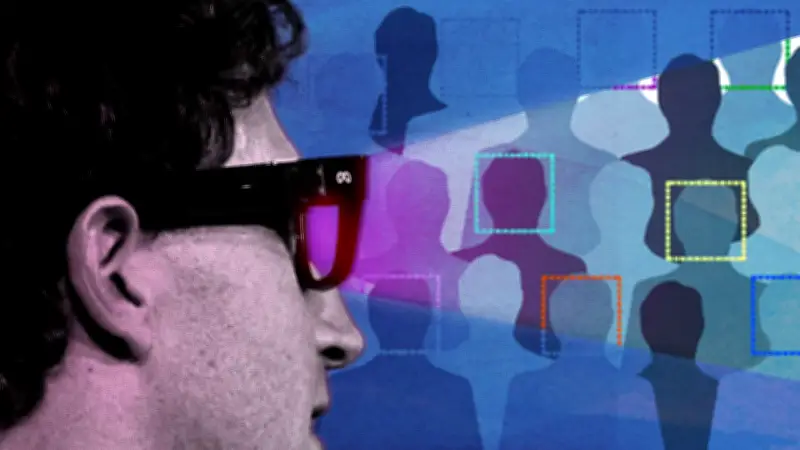
Facial recognition is not active in most smart glasses, but in 2024, Harvard students combined smart glasses, facial search engines, AI tools, and public databases to find personal information like home addresses and phone numbers just by looking at people.
Fareed Kaviani, a research fellow at Monash University, co-authored a 2024 paper on smart glasses use in Australia. Surveying over 1,000 Australians, 13.5 per cent of owners admitted to dangerous usage like wearing the glasses while driving or cycling, and 17 per cent admitted to prohibited use, including recording people without consent.
Kaviani told SBS News the research was from 2022, "when the device was not as well known and ubiquitous as it probably is today." He noted that self-reported data means "the real prevalence of dangerous or prohibitive use is difficult to establish. It could be higher, it could be lower."
Legal framework and enforcement
Avinash Singh, principal lawyer at Astor Legal, told SBS News most people have "no clue" about the laws regarding cameras or smart glasses. The Australian Privacy Principles are "technology-neutral" and adapt to changing technologies, according to the Office of the Australian Information Commissioner. This means smart glasses are governed at state and territory levels.
It is a criminal offence to film a person in a private or intimate circumstance without consent. Singh explained that "private conversations don't necessarily have to be in a private space... if there's an inference that the people having that conversation would expect that to remain a private conversation — that will satisfy the definition." In most states, recording in public without informing people could be an offence, though Queensland allows recording if the person is a participant in the conversation.
Singh said individuals, not companies, are responsible for offences: "In the same way as if someone went out, took a hammer and committed an assault, the manufacturer of the hammer would not be held responsible."
Call for stronger regulation
Repeated targeting or intimidation could breach stalking laws, and sharing recordings online may lead to doxing issues. Singh believes Australian privacy laws were drafted before this technology existed: "The current legal framework never envisioned that you would be able to wear a pair of glasses and record people without them knowing what was happening."
Stilinovic has seen smart glasses videos ranging from advertorials to "murkier waters of pickup artists." She called for more enforcement, saying, "For too long, we're dealing with a situation in which technology is unleashed onto society, and we don't have the guardrails in place. Then, the harm happens, and then regulators have to scramble to try to protect us from that harm."