Dry macular degeneration, the leading cause of blindness in Australian adults, has no cure, but new treatments are showing promising results. However, they are costly, and some are about to become even more expensive.
Avid bridge player Rene Sharp couldn't believe her eyes when her game slipped out of sight. "I couldn't tell the difference between the spades and the clubs," she said. Diagnosed with dry age-related macular degeneration, a gradual deterioration of the macula leading to vision loss, Sharp faced an uncertain future.
Promising Treatments
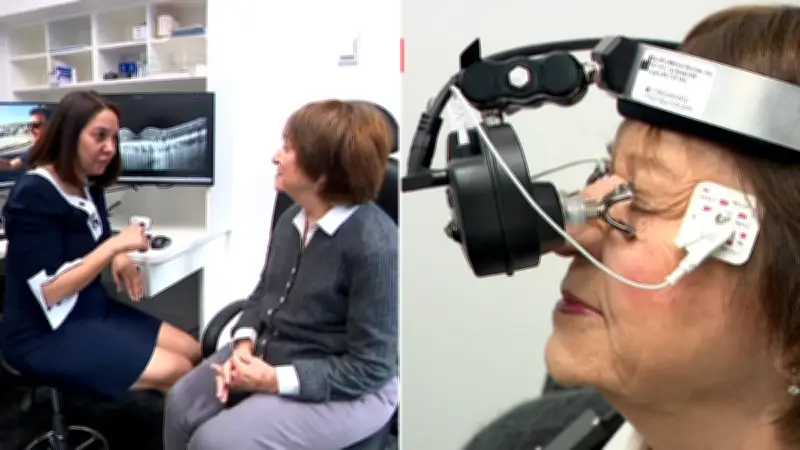
Eye surgeon Dr Shanel Sharma says two treatments are showing promise: dry macular injections and Macumera. Macumera is a non-invasive treatment that stimulates the retina using low-level microcurrent pulses delivered through closed eyelids, stimulating cells to produce more energy and improve function.
"In fact, all the patients have improved by at least one line," Sharma said. For Sharp, not only is she back playing bridge, she was able to regain her driver's licence. "I had such doubts. I thought I would never pass, but I did," she said.
Caution and Cost
But researchers are still casting a cautious eye over the technology. Researcher Professor Robyn Guymer warned: "Just because it's available does not mean it's gone through the rigorous testing like a drug, and it hasn't at the moment."
The other treatment, the injections, have been found to slow the loss of vision, but they could soon be out of reach for many. The producer has withdrawn its application for the pharmaceutical benefit scheme, so they'll soon cost patients around $18,000 a year. Biogen said the decision to withdraw was based on the proposed reimbursement criteria under consideration in Australia.
"There's another one called Izervay, and they are similarly looking to see whether they can get a broader indication for use on the PBS," Guymer said.