The Royal Commission into Antisemitism and Social Cohesion has completed its seventh hearing block with a single day of hearings focused on protests, examining both a pro-Palestinian march at the Sydney Opera House and a neo-Nazi rally in Sydney.
The commission heard evidence on the democratic function of protests, incidents of hateful conduct during demonstrations, and how police respond to such events.
Right to protest affirmed
In his opening remarks, Counsel Assisting Richard Lancaster stressed the fundamental importance of peaceful protest in a democratic society.
"Lawful public protests are a necessary and valuable part of a properly functioning democratic society. Rowdy public protests that deliver stinging criticism can be just as valuable and just as lawful," he said.
Mr Lancaster said the commission aimed to focus on opportunities to tackle antisemitism and improve the policing of public protest events, emphasising that antisemitism and discrimination must not be seen as acceptable parts of protests.
Opera House protest under scrutiny
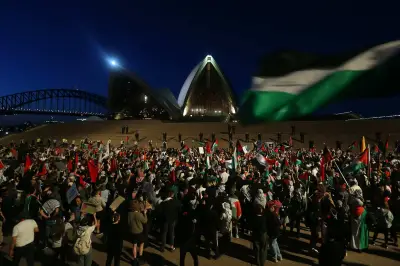
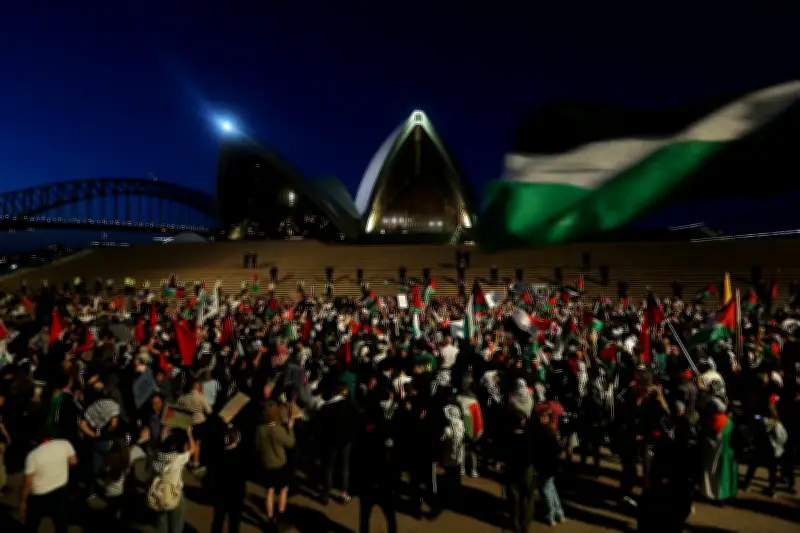
The majority of the hearing focused on a pro-Palestinian march on October 9, 2023, from Sydney Town Hall to the Opera House, which had been lit blue and white in memory of those killed in the Hamas attack on Israel days earlier.
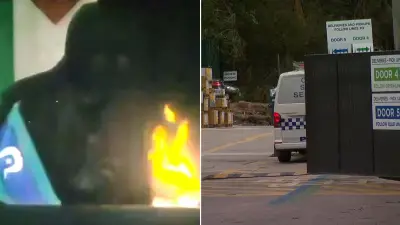
The commission heard some in the crowd chanted antisemitic slogans and that an Israeli flag was set alight.
David Ossip, President of the New South Wales Jewish Board of Deputies, criticised the conduct of some demonstrators, calling it appalling.
"It was a scene of international disgrace and infamy. It's among the clearest examples of antisemitism we've seen over the past few years," he said.
At the time, rally co-organiser Amal Naser said those shouting antisemitic chants were a small minority who did not represent the main group. Fellow-organiser Fahad Ali described the behaviour as "vulgar" and "selfish", saying it distracted from "immense human suffering in Gaza".
Police advice questioned
Mr Ossip also criticised New South Wales Police, claiming they had advised the Jewish community to avoid the CBD, which he said handed control to protesters.
"I thought it was quite an extraordinary and outrageous admission from police. I can't recall any group, particularly any religious or racial group, ever being provided advice that they should avoid their own city CBD," he said.
Acting Deputy Commissioner Peter McKenna said he could not confirm that police gave such advice.
"I haven't been able to ascertain factually that police gave the advice to the CSG (Community Security Group) for the Jewish community not to attend," he said.
Mr McKenna said officers at the protest were not concerned about it getting out of control, noting that news coverage may have exaggerated the situation.
Timing of protest challenged
Palestine Action Group barrister Dominic Toomey challenged Mr Ossip's criticism of the protest's timing, pointing out that Israeli Defence Force fighter jets began airstrikes in Gaza at about 5.30pm Sydney time on October 7.
Commissioner Virginia Bell intervened, saying she would rule on the relevance of the line of questioning if necessary.
Mr Ossip stressed the events of October 7, saying the protest perpetuated intergenerational trauma for the Jewish community. He said he had empathy for any innocent Palestinian.
Apology over neo-Nazi rally
Mr McKenna also apologised to the Jewish community over a failure to give advance warning of a neo-Nazi rally outside the state parliament in November 2025.
"Absolutely, it should have happened. It was a human error. We have systems in place to do that sort of thing. And unfortunately, on this occasion that did not occur," he said.
The hearings will now turn to examining the key drivers of antisemitism in Australia, including religious, far right and other ideologically-motivated extremism and radicalisation.